
We may earn money or products from the companies mentioned in this post.
A fish oil bottle can’t tell you whether your blood levels have changed. The OmegaQuant Omega-3 Index Basic test tries to answer that with a single finger-prick blood spot that you mail to a lab.
Our short verdict: Basic is a fairly priced way to get one longer-term omega-3 number. It’s worth buying only if that number will change what you eat or take. You should also be willing to retest to check that change.
This is a researched review, not a hands-on test. We didn’t order or use the kit. Our findings come from OmegaQuant’s official pages, its sample report and validation paper, NIH guidance, and competing products. You can find more biomarker test breakdowns on the Age Well Markers homepage.
What the Basic test measures, and what it leaves out
Basic reports one figure, the Omega-3 Index. It’s the share of EPA plus DHA, the two main marine omega-3 fats, among all the fatty acids in your red blood cells.
Most reviews skip a key detail. The home card collects whole blood, not separated red cells. OmegaQuant’s lab measures the dried spot and uses a validated formula to estimate your red-cell index.
Red blood cells live for months, so NIH notes their fatty acids reflect roughly the previous 120 days. The index shows your usual intake, not last night’s salmon dinner.
Basic doesn’t give you separate EPA and DHA values, omega-6 ratios, a trans fat score, or a full fatty-acid panel. Those come with the pricier tests.
How the finger-prick collection and mailing work

The process is short, but you do have to draw your own blood. Based on OmegaQuant’s official instructions and demo video, the steps look like this:
- Register the kit online.
- Fill in the details on the collection card.
- Prepare your finger, then prick it with the supplied lancet.
- Drop blood onto the card.
- Let the card dry. The demo shows about 15 minutes.
- Package it and send it back in the prepaid mailer, ideally the same day.
OmegaQuant’s FAQ says omega-3 testing needs only one drop. If the printed instructions in your kit differ from the video, follow the printed ones.
People who feel faint around blood, or who struggle to get a good drop, may find this the hardest step. Collection trouble shows up repeatedly in editorial reviews and customer feedback.
How long until you see your result?
Plan on a few weeks from order to result. OmegaQuant’s workflow page says kits usually arrive in 3 to 5 days, with results coming 2 to 4 weeks overall.
Its FAQ uses a different clock: most results post within seven business days after the lab receives your sample. Mail time is the unpredictable part, so treat neither number as a promise.
What the Basic test costs, including repeat tests
A single Basic kit costs $54.95 on OmegaQuant’s U.S. product page, as confirmed by our editor on November 21, 2026. The price covers lab analysis and a prepaid return mailer, with no hidden lab fees.
The product page also lists free shipping and 15% off two or more tests. That works out to $46.71 per kit. Anyone can use that public offer, and it isn’t a special deal for our readers.
Your real cost depends on retesting. A baseline plus one follow-up at full price comes to $109.90 before tax. Buying a single kit doesn’t sign you up for a subscription.
Some older reviews list Basic at $49.95, so confirm the total at checkout.
Supplements and consultations cost extra. OmegaQuant’s store also promotes fish oil from its sister company. That tie doesn’t make the test wrong, but you don’t need that brand to raise your index.
The refund policy has a conflict you should check
OmegaQuant’s dedicated return-policy page offers a full product-price refund on your first direct-site order. You must ask within 30 days of delivery, even if you’ve used the kit. It’s limited to one per household, and nothing needs to be shipped back.
The FAQ, however, still describes unused-kit returns with a 20% restocking fee. Get written confirmation from OmegaQuant before you rely on the guarantee.
How accurate is a mailed dried-blood test?
The method has published support, with a caveat. A December 23, 2016 paper found the dried-spot estimate tracks the standard red-cell measurement. Its authors were affiliated with OmegaQuant, so the evidence isn’t fully independent.
Lab accuracy also isn’t the same as a health benefit. The research we reviewed doesn’t show that buying this test, or reaching a certain number, prevents disease.
OmegaQuant states the test isn’t FDA-cleared or approved and isn’t meant to diagnose or treat any condition. Some competing reviews call it FDA-approved, which is wrong. Federal lab-quality rules, known as CLIA, are separate from FDA product approval.
Reading the 8% to 12% target on your report
OmegaQuant’s sample report shows two ranges that are easy to mix up. The “desirable” range of 8% to 12% is the company’s own target. The reference range of 2.8% to 15.4% shows where most tested people fall.
Treat 8% as OmegaQuant’s interpretation, not a diagnosis. A higher index isn’t proof that you’re protected from heart disease, dementia, or other conditions.
A low number doesn’t prove your supplement is faulty, either. Dose, diet, and how your body handles fats all play a part. Discuss surprising results with a clinician.
Who will get real value from it, and who should skip it
Basic works best when you have a specific question. For example, you might wonder whether a fish-free diet leaves you low, or whether your daily capsule actually raised your level.
It’s a good fit if you:
- Plan to change your diet or supplements and want a before-and-after check
- Eat little or no fish and want a baseline
- Prefer a home test with no lab appointment
- Only need the headline index, not a detailed breakdown
Skip it if you:
- Wouldn’t change anything based on the number
- Want EPA and DHA reported separately or need a full fatty-acid profile
- Would rather have a clinician order and explain your lab work
One safety note: a low score isn’t a reason to self-prescribe high doses. NIH reports that high-dose omega-3s raised atrial fibrillation risk in some high-risk trial groups. Omega-3s can also interact with some medicines, so talk with your doctor before a big dose change.
What buyers complain about
Besides collection trouble, slow results come up often in reviews and customer feedback. We couldn’t verify how common either issue is.
A June 10, 2026 Trustpilot reviewer described frustration over replacing an expired kit. That’s one person’s account, not proof of a pattern. Still, check the printed expiration date when your kit arrives.
The clearest problems are ones you can see yourself: mismatched turnaround wording and conflicting refund terms on official pages. Star ratings, good or bad, say nothing about lab accuracy.
When a second omega-3 test is worth paying for
Retest when you’ve made a real change and want to know whether it worked. Because the index reflects about four months, testing sooner mostly measures your old habits.
OmegaQuant’s June 2025 sample report suggests retesting 3 to 4 months after a change. Once you’re in range, it suggests every six months. Its sales page promotes testing every four months. Neither schedule is a medical requirement.
Small shifts between tests may not mean much, since every lab result varies a little. Look for a clear move that matches the change you made. If your routine stayed the same, a repeat test is hard to justify.
Basic vs Plus, Complete, and two outside alternatives
OmegaQuant’s upgrades report more markers for more money. Extra numbers only help if you or your clinician will actually use them.
| Test | Price | Collection | What it reports | Main catch |
|---|---|---|---|---|
| OmegaQuant Basic | $54.95 | Home finger prick | Omega-3 Index (EPA + DHA) | One number only |
| OmegaQuant Plus | $89.95 | Home finger prick | Index plus ratios and a Trans Fat Index | $35 more than Basic |
| OmegaQuant Complete | $109.95 | Home finger prick | Index plus a broader fatty-acid profile | Twice Basic’s price |
| Carlson Omega-3 Test Kit | $54.95 | Home finger prick | Processed by OmegaQuant | Stock status unclear |
| Quest Omega-3 & 6 Ratio Test Panel | $85 ($79 + $6 physician fee) | Lab appointment | EPA + DPA + DHA, plus omega-6 markers | 8 to 12 hours of fasting; not available in AZ, HI, or PR |
Carlson’s kit costs the same, and Carlson says samples go to OmegaQuant. It’s another place to buy, not an independent lab check.
Quest uses a professional blood draw, and its fee covers review by an independent provider. Its result counts EPA, DPA, and DHA in whole blood. Don’t apply OmegaQuant’s 8% target to it.
Is OmegaQuant Basic worth buying?
Yes, for the right buyer. Basic suits people who want an affordable, long-term omega-3 reading before and after a planned diet or supplement change.
Its biggest strength is simplicity: one drop at home and a clear headline number. The main drawback is that you get only that number, judged against a company-set target. Research hasn’t shown a proven link between testing and better health.
At $54.95, it’s fair value if you’ll act on the result. If you won’t, keep your money.
Questions buyers still ask about OmegaQuant Basic
Do I need to fast or stop my omega-3 supplement before testing?
No. OmegaQuant’s FAQ says fasting isn’t needed, and it advises against changing your usual omega-3 routine right before testing. Never stop a prescribed medicine to prepare for the test.
How long does an unused kit last?
OmegaQuant says the card’s preservative lasts 2.5 years from manufacture, not from delivery. Your sample must reach the lab before the printed expiration date.
Is Basic enough, or should I buy Plus or Complete?
Basic is enough if you only want to know whether your level is low and whether it changes. Pick an upgrade only when someone will use the extra ratio or fatty-acid data.
Sources and review methodology
This is an independent desk review, not firsthand testing. Prices reflect the official product listings as reviewed on November 21, 2026. Policies and state availability should be reconfirmed before ordering.
- OmegaQuant Omega-3 Index Basic product page
- OmegaQuant FAQ
- OmegaQuant product catalog
- NIH Office of Dietary Supplements: Omega-3 Fatty Acids (Health Professional)
Medical information is for education, not individualized medical advice. Discuss test results or supplement changes with a qualified clinician.
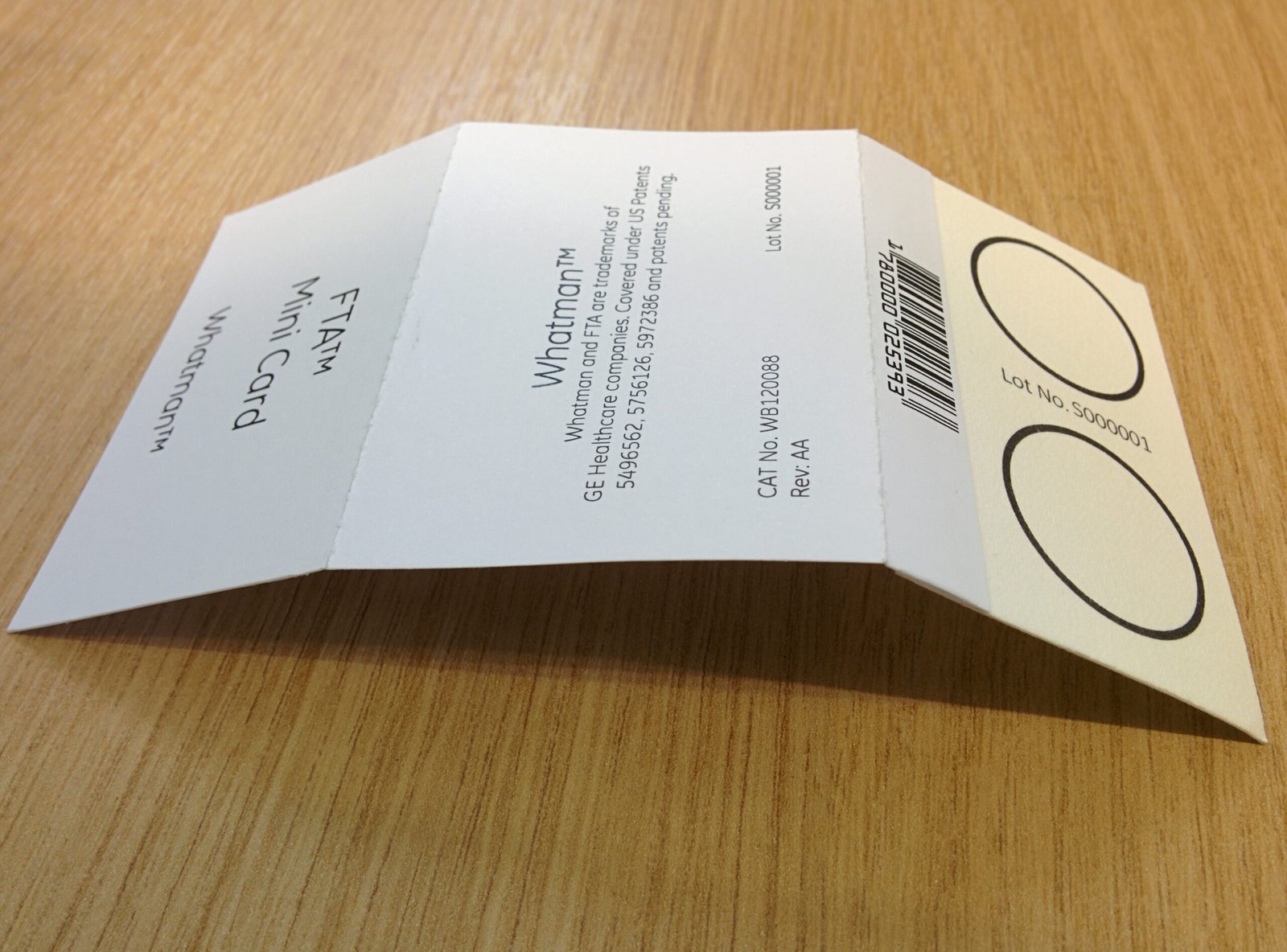
Featured image: Magnus Manske / Wikimedia Commons, CC BY-SA 3.0. Illustrative generic dried-blood-spot card, not an OmegaQuant kit. No changes to the source photograph.

1 thought on “OmegaQuant Omega-3 Index Basic Review: Is At-Home Omega-3 Testing Worth It?”